
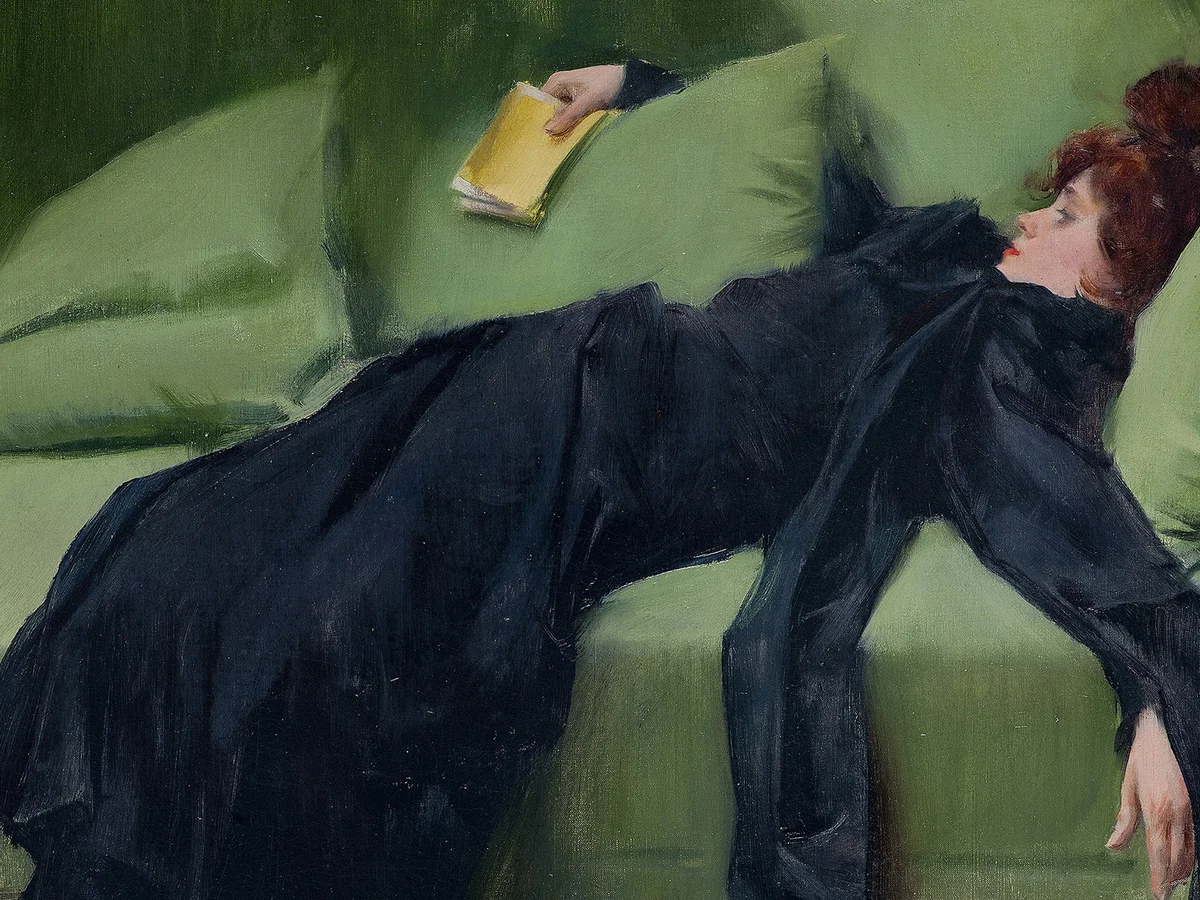
Today is the November 29, Saturday. In Judaism, this is the day when almost all activities are suspended, especially those tied to labour and production. It is the day of Saturn, the planet of restraint and limitation, when time seems to thicken and grow heavier. There is a particular gravitas to this day, a slowness that invites the quiet observation of what moves within.
It is also the proper terrain of acedia, a word that comes from the Greek akēdía, from a- (negation) and kēdos (care, concern, loving attention). Etymologically, it denotes the absence of care, the incapacity to be moved. The monks called it the demon of noon, the hour when the sun stands at its peak in the sky and the soul feels the weight of futility and repetition. At its core, acedia is the opposite of the cura animarum, the care of the soul, that loving vigilance which keeps the bond between human and Divine alive.
In the zodiac, noon corresponds to the point of the Medium Coeli, traditionally associated with Capricorn: Cardinal Earth, where Spirit densifies and feels the yoke of matter. It is the also related to Arcana XV, The Devil, the neutral force of Vau in the fifth ternary of the Tarot, where Spirit is tested by the prison of form and the temptation of separation. Acedia may be understood as a spiritual confinement: hemmed in by matter, the mind mistakes the silence of God for absence. But it is within that emptiness that Saturn murmurs. To endure boredom without fleeing from it is already a secret form of prayer.
In the Christian monastic orders, the response to acedia is vigilance. The antidote to the demon of noon is the state of népsis (νήψις), a Greek word meaning spiritual sobriety, wakeful lucidity, a continuous attentiveness that prevents the soul from falling asleep. It echoes the exhortation of the First Epistle of Peter (1 Peter 5:8): “Be sober, be vigilant; your adversary the Devil prowls around like a roaring lion, seeking whom he may devour.” The verb γρηγορήσατε (grēgorēsate) derives from grēgoreō, “to be awake,” “to keep watch”, the same root that later gave rise to Egregore, from the Greek ἐγρήγορος, “the Watcher.”
In the Book of Enoch, the Egregoroi were the angelic Watchers who fell from grace when their vigilance turned to desire. The word survived in Hermetic tradition as the name for a collective spiritual intelligence formed by sustained attention and shared intention. When Peter commands grēgorēsate, “be vigilant,” he speaks not only of moral sobriety but of ontological wakefulness. It is to stand among the Watchers, those who keep the flame of awareness alight in the heart of the world. Nēpsate, from nēphō, “to be sober,” completes this movement: the guarding of the heart through lucid restraint, the practice of watching each thought without becoming it, of keeping the inner fire alive within the cell of matter.
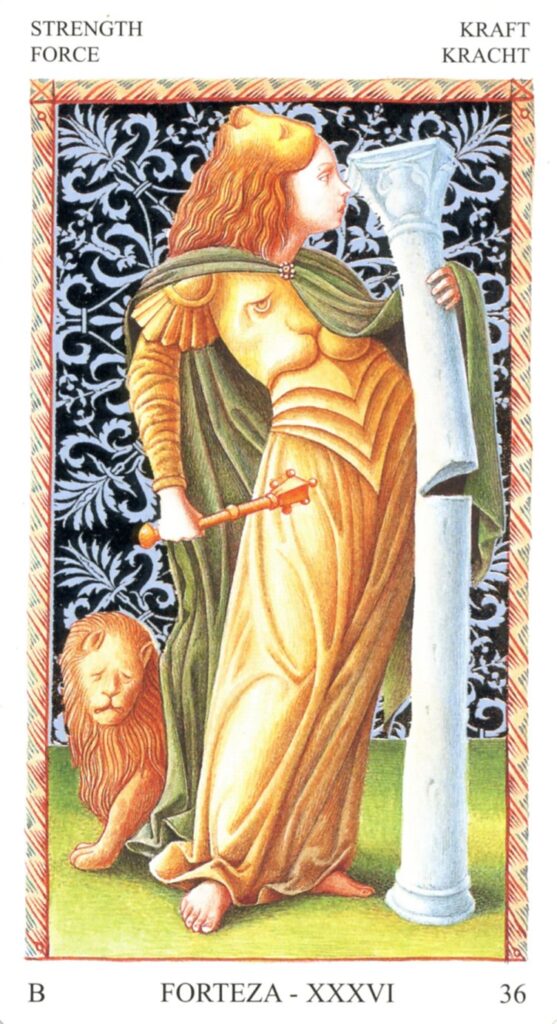
This is the spiritual meaning of the Lion of which Peter speaks. He is the blind instinct, the vital fire that, without consciousness, consumes. In the Tarot, Arcana XI Strength representes one of the four Cardinal virtues and it portrays the soul, in the form of a woman, mastering that same Lion with gentleness and vigilance. She does not subdue him by force, but contains him. The image represents népsis in action, as it is the stillness that holds the axis between Chesed (thesis) and Geburah (antithesis), the sephirot of mercy and severity, whose synthesis in Tifereth is the awakened heart. Strength is the letter He of the fourth ternary, passive and fruitful, which receives the destiny revealed by the Wheel (Yod).
To accept destiny with serenity and presence is the highest form of vigilance, the moment when the soul, standing before the Lion of boredom and passion, no longer fears being devoured, as it has learned to watch over the fire within its own breast.
Kύριε ελέησον