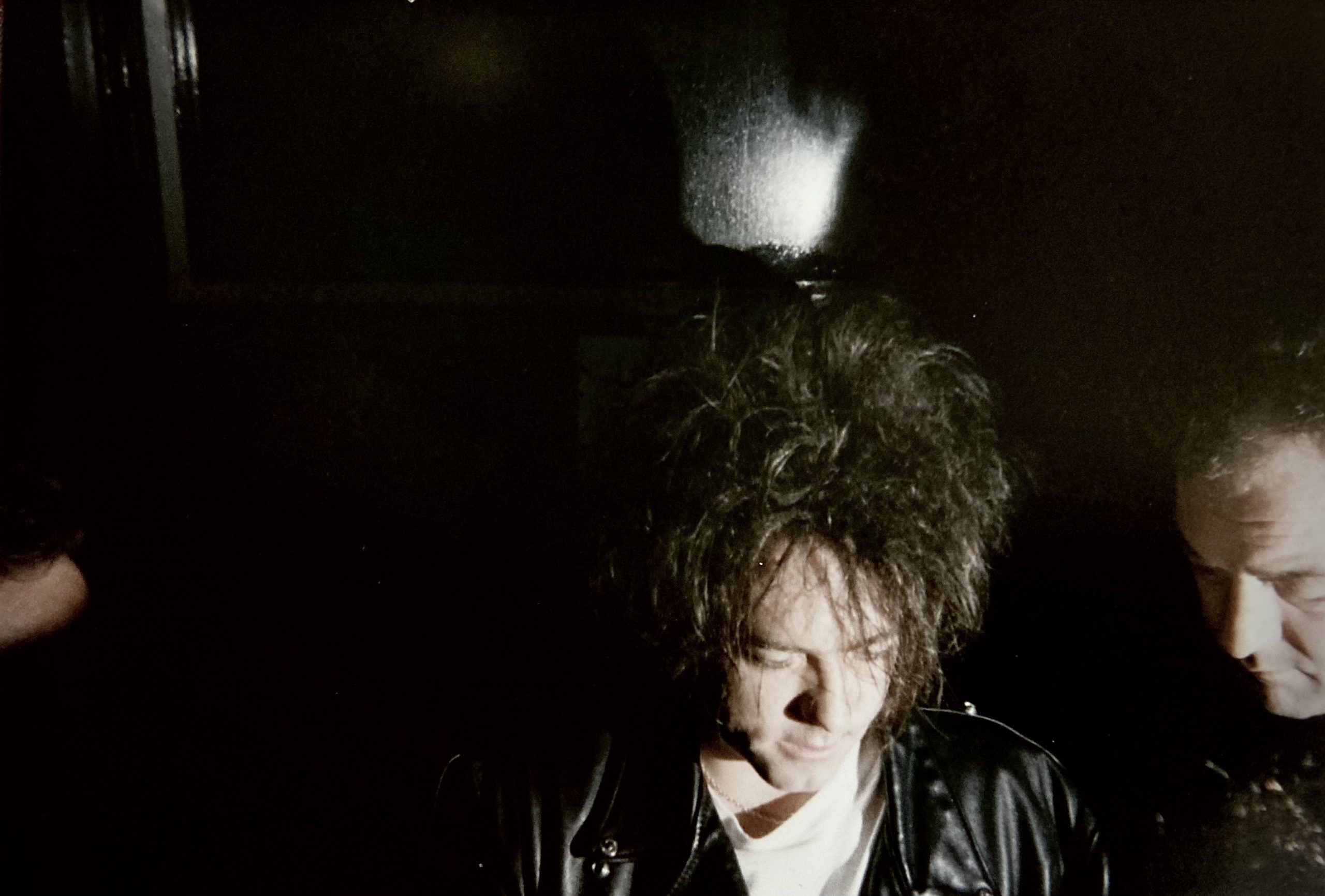
Open, the opening track of Wish (1992), marks one of The Cure’s most paradoxical phases. After the sombre majesty of Disintegration, the band returned to a hedonistic melancholy, filtered through the exhaustion and self-awareness of those who have already wandered through the labyrinth of desire. Open stands as a drunken prologue, a profane liturgy on emptiness and excess. The guitars spiral like a vortex while Robert Smith’s voice, at once ironic and tender, confesses: “I really don’t know what I’m doing here, I really think I should’ve gone to bed tonight.” The admission itself is ritual, an initiation into a world where dispersion becomes a sacrament.
The song astrologically could belong to the third house, the house of the Goddess, the realm of mundane reflection, where the human being contemplates their own fragmentation. Smith, with his tongue-in-cheek British humour, acts as mask and mirror, allowing him to face decay without surrendering lucidity. The bar, the alcohol, the night become the temples of the mundane, the altars of Venus in Scorpio, wounded and fascinated by her own venom. In antiquity, the scorpion was believed capable of killing itself with its sting, and that same self-destructive eros runs through Smith’s voice. Pleasure burns itself out and desire turns upon itself as if seeking the source of its own poison.
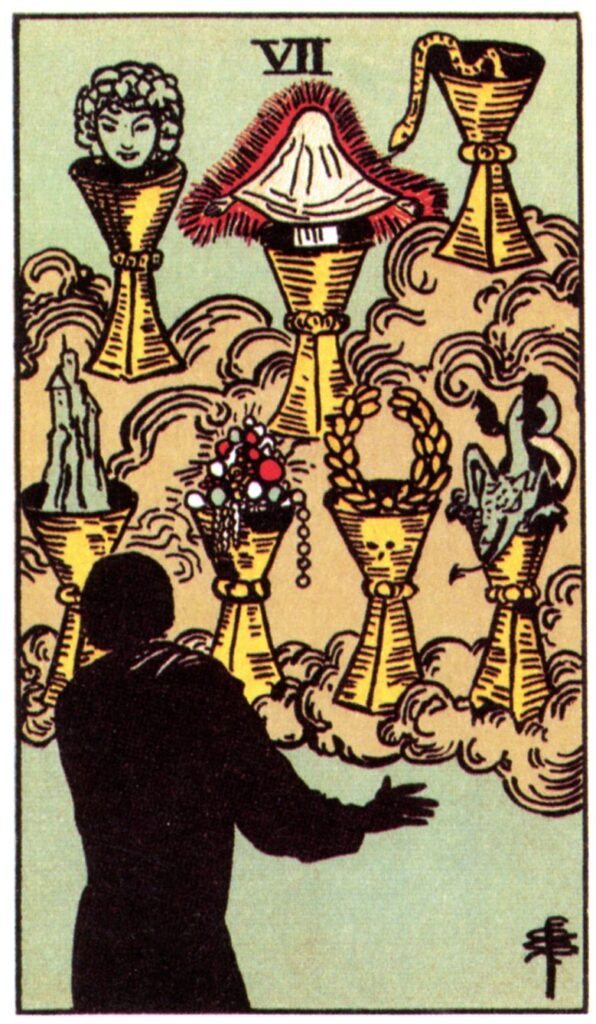
He becomes the man of the Seven of Cups, gazing into the seven illusory mirrors of will scattered across the emotional plane. “Drink it up, drink it up,” he repeats like a drunken litany, a toast to his own disorientation. Each glass becomes a mirror and the strangers gateways into another, blurry world. The body enacts a chaotic ritual, a pilgrimage through pubs and neon altars replacing the lost inner temple. The vestibular confusion of intoxication mirrors the spiritual imbalance of one who has forgotten the axis. Here speaks the poet of the Third House, the chronicler of small tortures, the writer of bar-napkin gospels who turns dizziness into theology.
Etymologically, distraction comes from the Latin dis-trahere: dis meaning “apart” and trahere “to pull or drag.” It literally means “to be pulled apart,” torn between several directions at once. Its opposite is the Greek népsis, the vigilant sobriety of the spirit that remains centred amid multiplicity. In Open, such sobriety is unattainable. The subject is dragged outward by sound, crowd, and chemical rapture. “And I open my mouth and the room disappears”: the open mouth, ruled by Venus, becomes a portal of dissolution, the confession of a soul undone by excess. The song turns intoxication into an allegory of the modern spirit, where losing the centre becomes a revelation in itself. In the end, Open is the mass of imbalance, a profane prayer to the Goddess of dispersion, celebrated among laughter, glasses, and guitars, where humour and venom mingle like wine and blood.
And the most ironic, most paradoxical thing is that, in being pulled apart in a thousand directions and losing his centre, Smith condenses that image into one extraordinary song. A musical act of reintegration and tikkun.
Kύριε ελέησον