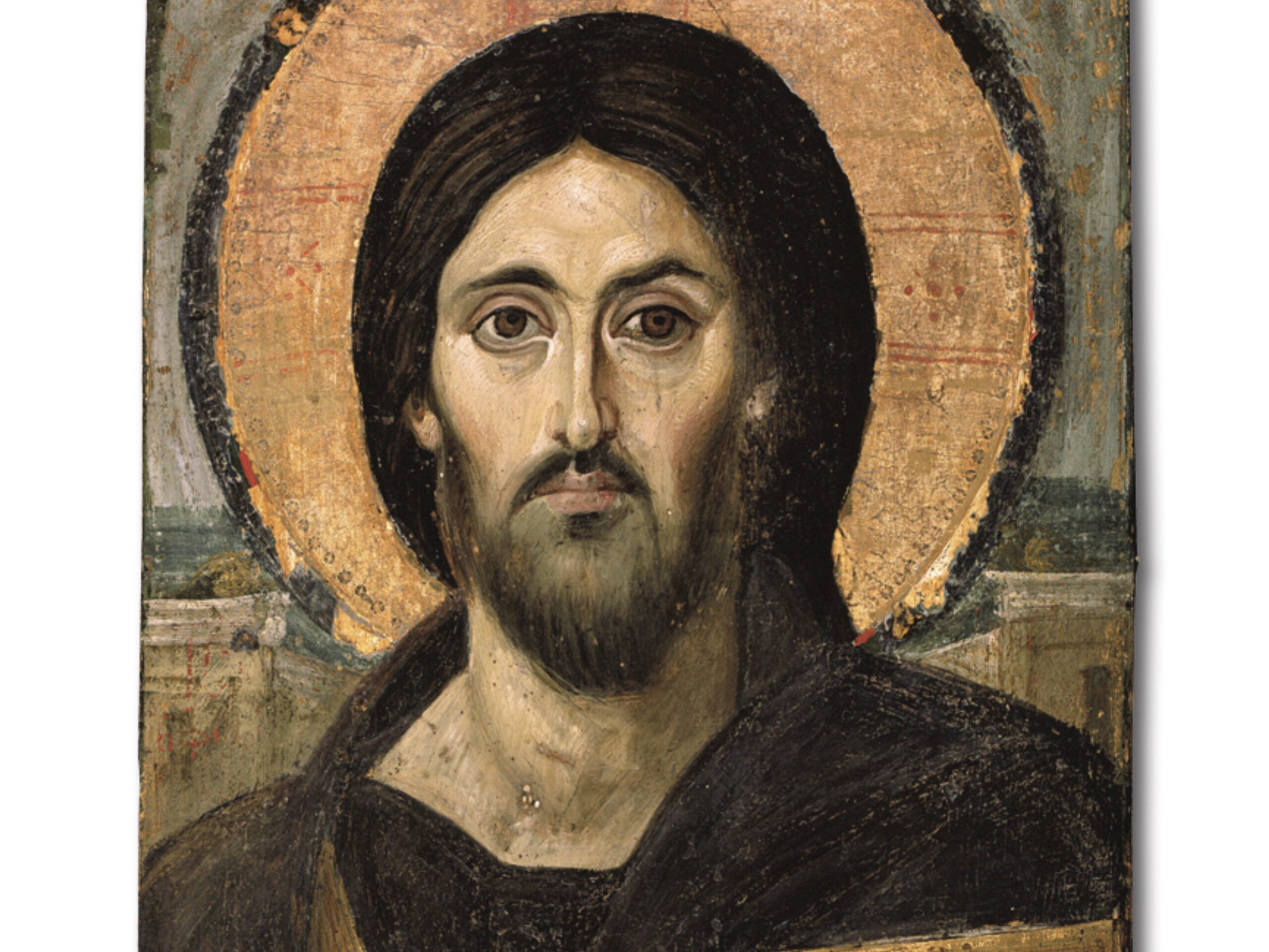
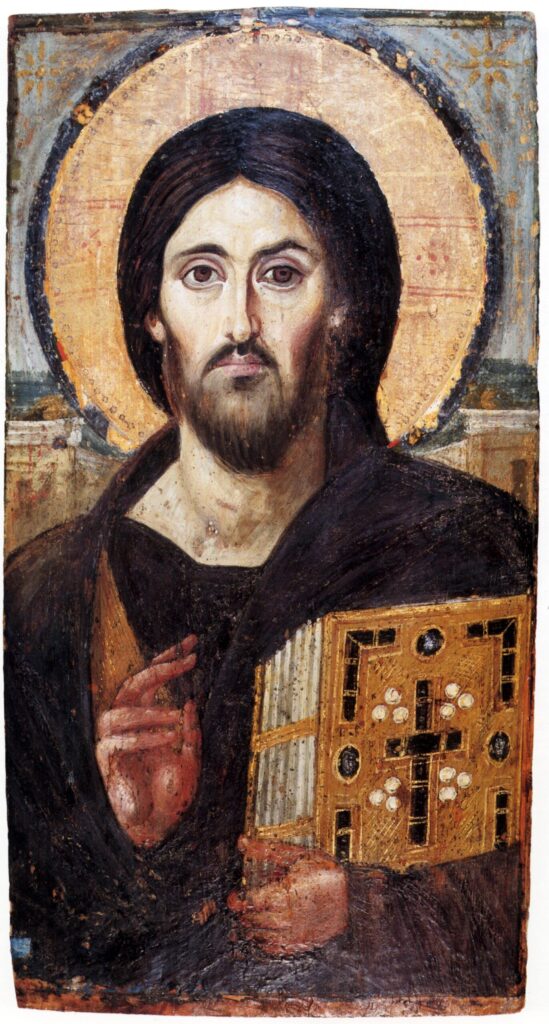
It is Christmas. Right now, in small Bulgarian, Armenian, or Georgian churches, lost in remote villages, the vigil happens. There is no comfort. No electric lighting. No staged décor. There is cold, stone, aching feet, repetition, hours standing upright. The incense weighs on the air. The Pantocrator dominates the dome: an asymmetric face, one side severe and the other gentle, the Logos that measures and the physician who heals. Isaiah is read without sentimentality, the psalms follow one after the other.
It is Christmas. And something essential has been lost in the Roman rite as it is now celebrated, bathed in artificial projectors and those bland plastic candles of today, with their little switch and LED glow. As if the Roman Church is afraid of real Fire. Have we really reached the point where a church fears fire itself, the primordial element, the one that once set the tongues of prophets alight? The Christmas Mass broadcast from Vatican feels like a polished surface for mass consumption, where the price of the flesh is entirely missing. The error disappears, failure is hidden. Incarnation is treated as a metaphor, when it should smell of the body, of limit, of cold, of fatigue. To incarnate is precisely that… To accept time, to accept destiny driven like a spear into our side.
And what, then, of those who suffer now, who feel the pain of the flesh, the limit, the prison of circumstances? How are they to recognise themselves in rites that have become artificial, bloodless, emptied of the very thing they claim to assure? All too often even the language itself has been abandoned. Latin discarded, replaced by linguistic imitations that sound like neutral commonplaces. But to name is Verbum; and Verbum is Logos; and Logos is Christ. To speak is to call reality to account, to reorder reality itself.
A rite needs a body and a body has wounds. Without the injury, the altar is a platform, nothing more. Without the weight of language, the Word will not descend. Symbols only operate when they translate something between two different realms. A rite without the body cannot hold the Spirit. And Christ does not enter the world in abstraction: He comes when the Sun is in Capricorn, the solar principle, the Christic consciousness, the ancient solar lineage that reaches back to Osiris. He enters the densest sign, the mineral sign, the sign of bone, mountain, cave, stone, granite, ruled by Saturn. Christ accepts the weight of Saturn, the master of Time and Space, the seventh sphere of embodiment. To reject this is to refuse the entire cosmic drama.
Böhme becomes necessary in these moments. For him, nothing is born from harmony; everything is born from friction. Light just does not appear on its own for the sake of it; it appears because it meets resistance (The light shineth in darkness, and the darkness comprehended it not – John 1:5). Creation is a collision of wills. Abrasion comes with it. Between affirmation and negation, something new emerges. The third thing. The Incarnation is that third thing. Neither the unreachable pure spirit, nor flesh abandoned to error, but the collision of the two producing a new reality. A tectonic event. The eternal accepting asymmetry. Perfection accepting flaw. The Logos entering the regime of pain so that pain can be traversed from within.
On Mount Athos the vigil now lasts the whole night. Men stand for hours without a seat. The manger and the tomb draw close to one another. The Child is wrapped in burial bands from birth because to be born is to enter the domain of death, error, pain, consequence. Christ is born as a soldier of fate, to use Valens’ language. In these churches or in the Coptic world that still carries Alexandrian weight, this remains legible: Christ descends into the plane where there is limit, fracture.
And we return to the Pantocrator. The facial fracture of it. It accepts it. The asymmetry is theology in icon. One eye weighs, while the other pardons. One half binds, while the other releases. Nothing is reconciled by a smile. The tension is held. Perfection, entering time, gains imperfection. Eternity, accepting flesh, acquires an uneven face, just like ours. This is the price of descent.
It is Christmas. The eternal has accepted contour and the boundary has become a doorway.
Kύριε ελέησον
Kύριε ελέησον