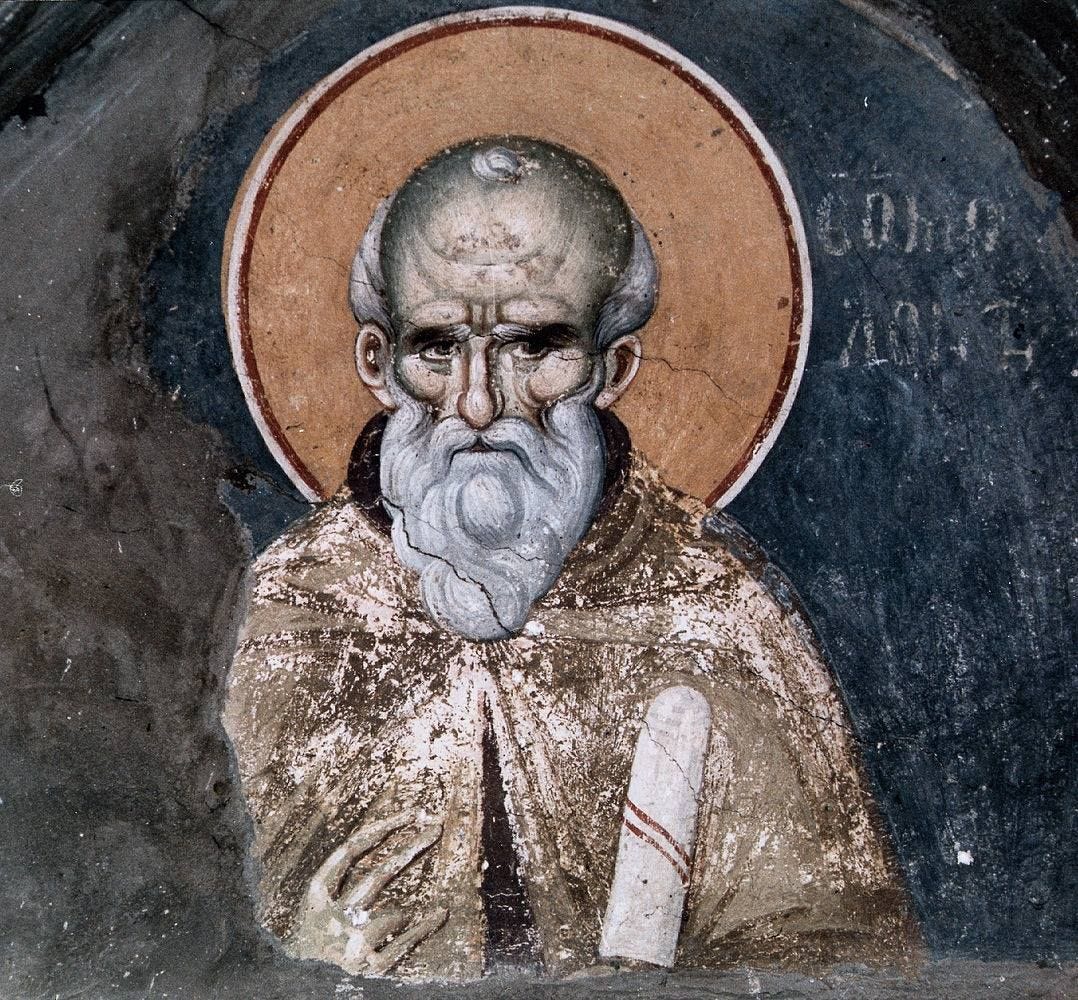
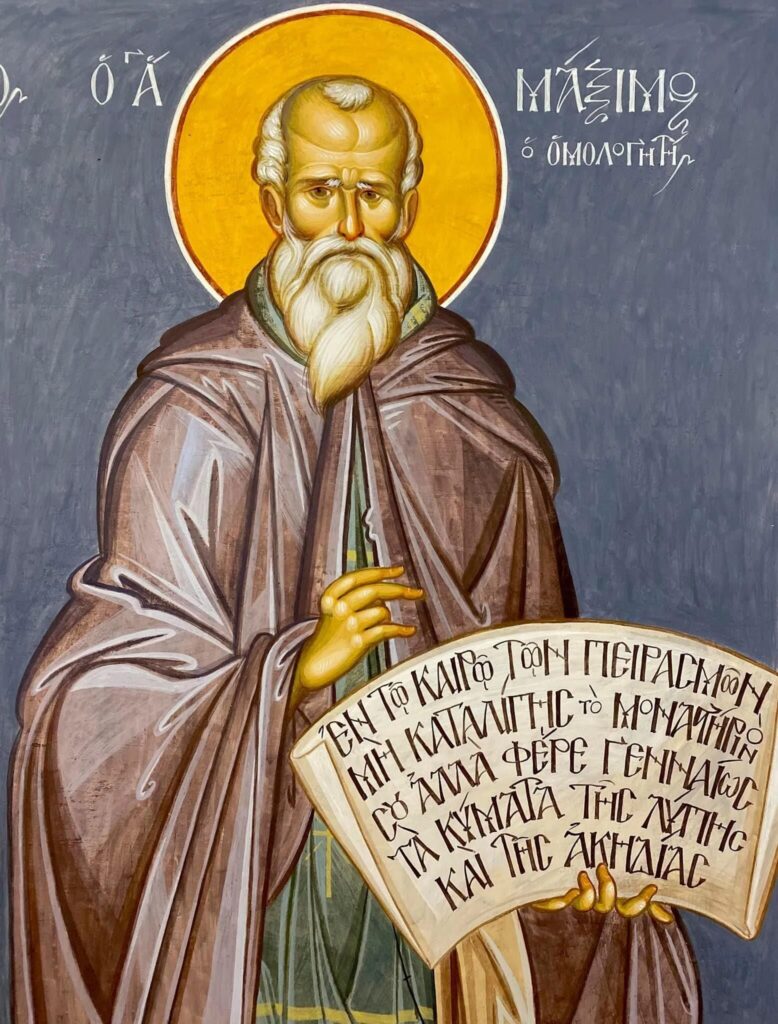
Today, the Bizantine Church celebrates Saint Maximus the Confessor, the theologian who united in his own body the Word and the Cross. Amid the Monothelite controversy, Maximus defended to the point of martyrdom that in Christ there coexist two wills (the Divine and the human) reconciled in Love. Far from being only theoretical, the doctrine expressed the central intuition of his mysticism. All creation moves from the Logos and returns to the Logos, and that the path of this return is free obedience, as loving consent to one’s own origin. In Maximus, to obey is to allow the human will to sing once more in unison with the Word, who orders all things without coercion.
Theosis, or deification, is the name of this restored harmony. Man becomes what he contemplates and, by contemplating Christ, participates in His mode of being. It is unity without confusion, distinction without separation. The entire cosmos finds its proper form when each being corresponds to the logos within it. It is precisely here that the poem of the Portuguese philosopher Agostinho da Silva resounds:
“Crente é pouco sê-te Deus
e para o nada que é tudo
inventa caminhos teus”
“To be a believer is too little, be thyself God,
and toward the nothing that is all,
invent thy own paths.”
In luminous and libertarian language, Agostinho expresses the same theology of union. To be God is not hubris, rather the fulfilment of likeness; the nothing that is all is the kenosis, the self-emptying that makes man transparent to the Divine; and to invent one’s own paths is to continue creation itself, as co-creator in Love. Maximus and Agostinho, separated by centuries and idiom, confess the same truth.
Kύριε ελέησον