

I received a question from a querent who wished to know whether her natal chart contained any indication that may explain the repeated failures in her relationships, which she described as being marked by loss, conflict, and recurring frustration. The analysis that follows is conducted strictly within the parameters of medieval astrology.
I. Jupiter and the 12th House
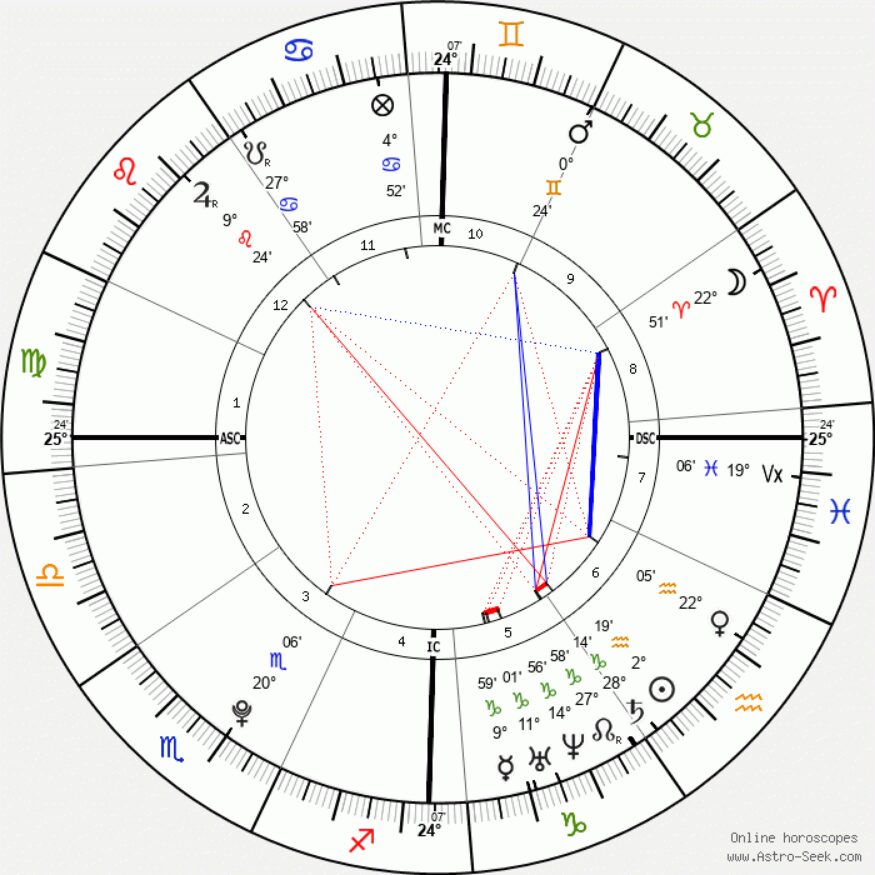
The relational configuration of this chart is difficult. The 7th house falls in Pisces, making Jupiter its ruler. But Jupiter, though holding some dignity by the triplicity of Fire in Leo, is retrograde and placed in the 12th house, the house of hidden enemies and self-undoing. This weakens its power to bring harmony or lasting union. Partners with strong Jupiterian traits may seem generous, idealistic, ego-driven, confident or impressive, but in practice they often become sources of loss and betrayal. These partners act as the hidden enemeis themselves over time, agents of sabotage, draining the native’s strength and freedom. The retrograde motion deepens the pattern: Jupiter keeps repeating the same cycle of hope, captivity and finally disappointment.
II. The Solar-Jupiterian Opposition and the Houses of Affliction
The most relevant applying aspect is the opposition of Jupiter to the Sun in Aquarius, placed the 6th house. This direct connection between the two houses of affliction (the 6th and the 12th) is one of the most pernicious configurations possible. It unites two houses that make no aspect to the Ascendant. We never like to see the ruler of the 12th in the 6th, nor that of the 6th in the 12th. This represents an exchange between houses of difficulty, submission, health difficulties, sabotaging and servitude.
The opposition between Sun and Jupiter is a circuit of exhaustion between body and confinement, making relationships the focus through which the vital Solar principle is constantly drained. The result is a pattern in which union wastes life rather than sustains it, transforming the impulse toward companionship into an act of subjugation.
III. Venus-Mars in Conflict Too
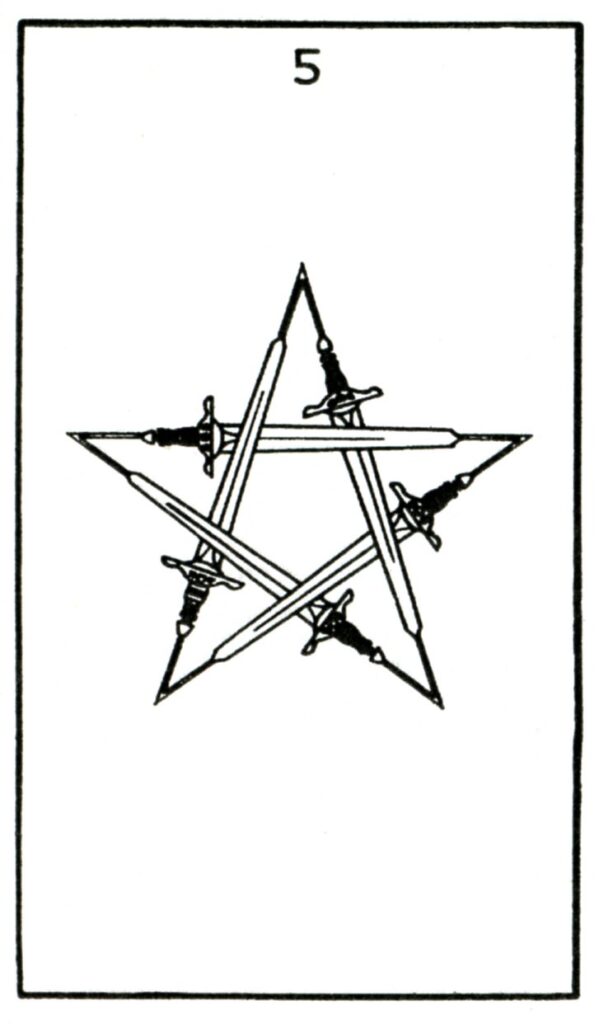
The secondary significator of relationships by her exaltation in Pisces, Venus reinforces this pattern. She is also in Aquarius, in the 6th house, with no essential dignity of note, submitting the Venusian principle to the conditions of labour and fatigue. The feminine planet of unity and conciliation is in a sign of mental and divisive character, associated with judgement, detachment, and abstraction. The Tarot correspondence of Venus in Aquarius is the Five of Swords, the card of separation through intellect, unreal expectations, and the odd thing of finding pleasure in dispute. This Venus is more divisive than unitive, constantly measuring love with minutae instead of receiving it. In the 6th house, Venus is also cadent and with little power of manifestation.
Her only applying aspect before leaving the sign is a square to Mars in Gemini in the 10th, confirming the rising tension throughout life. Mars is angular and mutable, with all the power to cut, divide, cause strife, making the conflict publicly. It must also be noted that Mars holds triplicity rulership in Pisces and, by hierarchical extension, participates as a secondary significator of relationships.
The classic Aphrodite-Ares conflict is here reproduced in full force. Mars is in the 10th, the second most powerful house of the zodiac, angular and capable of great effect. In Gemini, an airy and mutable sign, he acts with sharp and verbal destructiveness, often manifesting as rupture, dispute, or public exposure. The Venusian principle, already weakened by cadency and lack of dignity, moves inevitably toward collision with the principle of division and discord.
IV. An Afflicted Moon In The 8th
The Moon is in Aries in the 8th house, a place of loss, death and anxiety. Although not a direct significator of relationships, her participation is relevant because she holds triplicity dignity in Water, the same element as the 7th house. But she also holds no essential dignity, which accentuates the overall debility and describes a condition of vulnerability and restlessness. Her separating sextile to Venus indicates a fleeting harmony already past and of no consequence to future developments. Her only applying aspects are two squares: one to Saturn in domicile in Capricorn in the 5th, and another to the Sun in Aquarius in the 6th. The square to Saturn confers structure and restraint but through limitation, delay, and frustration. The square between the two luminaries, both in houses of affliction, is a classical sign of vital discord between these two major hylegic planets.
V. Final Judgement and Counsel
Technically, the chart exhibits an almost total correspondence between the significators of relationship and the houses of misfortune. Jupiter rules the 7th and is in the 12th; Venus is cadent in the 6th and without dignity; Mars, a co-significator by triplicity, is in square to Venus from the 10th; and the Moon is likewise debilitated in Aries and applying between Saturn and the Sun. This repetition confirms that the relational field is one of the principal channels through which the malefic nature of these houses is manifest.
Sobriety is necessary then. The native will struggle to sustain stable partnerships or to find genuine fulfilment through them. Medieval doctrine is unambiguous: when the principal significators of union are entangled with the houses of service and concealment, relationships are hard. Without analyzing here other factors in the chart, and noting that the Ascendant is Virgo (a sign governed by material and practical concerns), the querent would do better to redirect her energies toward her Mercurial and Saturnian strengths. Mercury in Capricorn in the 5th is fortified by Saturn’s co-presence there, dignified and accidentally benefic. This is a creative and disciplined Mercury that also rules the 10th house of the Medium Coeli. To invest in this creative-professional axis will prove far wiser and more rewarding than to persist in expectations of emotional fulfilment that the chart itself portrays as exhausting and self-defeating.
Kύριε ελέησον