
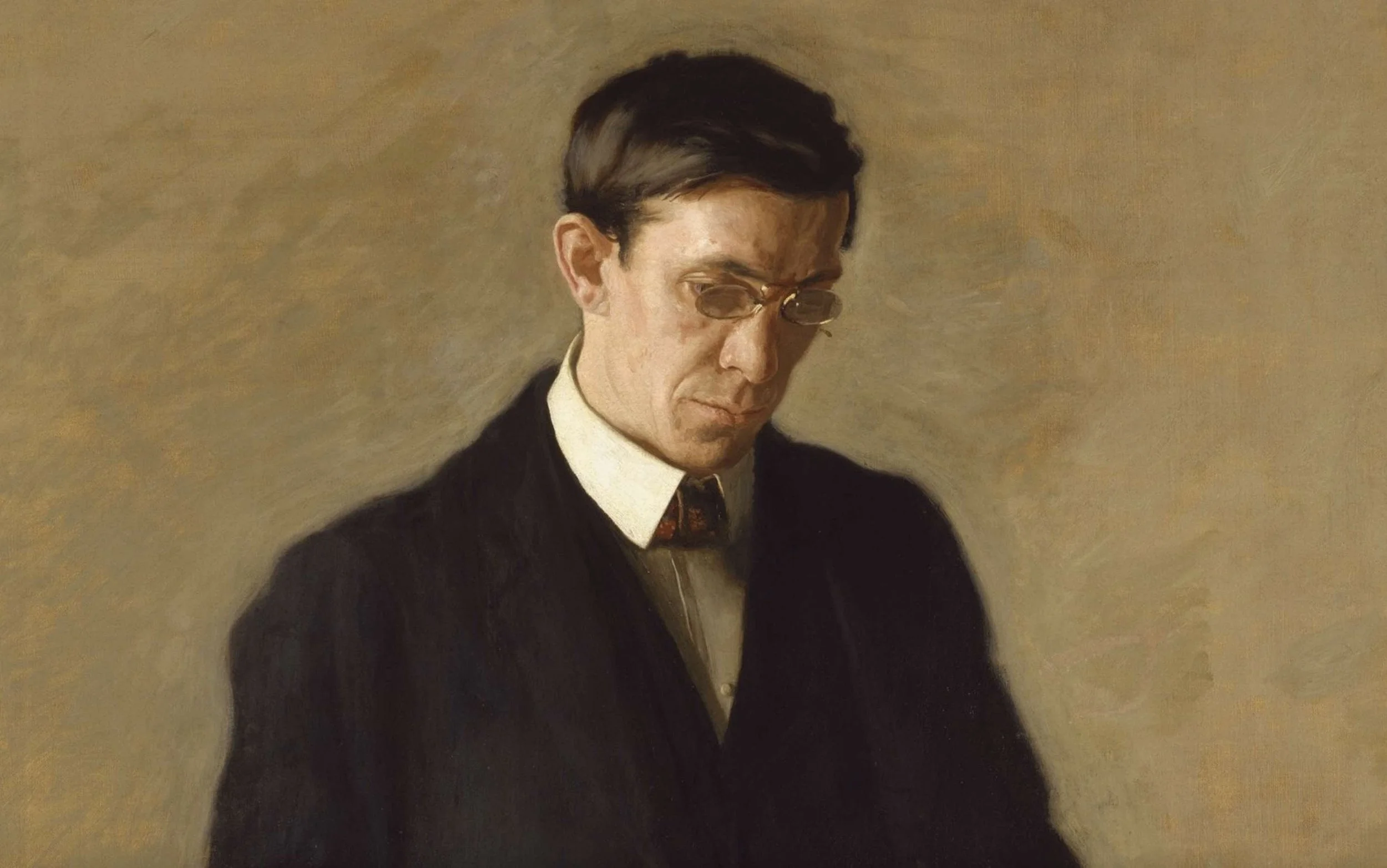
I decided to analyse William Stoner through the symbolism of the Tarot, since he is one of my favourite literary characters. Stoner, by John Williams, is a novel about an entire Stoic life lived without heroic gestures or visible conquests, but with a strong inner coherence. My cardinal reading uses the cards as a way of seeing more clearly the structure of the character and of his path.
East/Ascendant – Ten of Pentacles
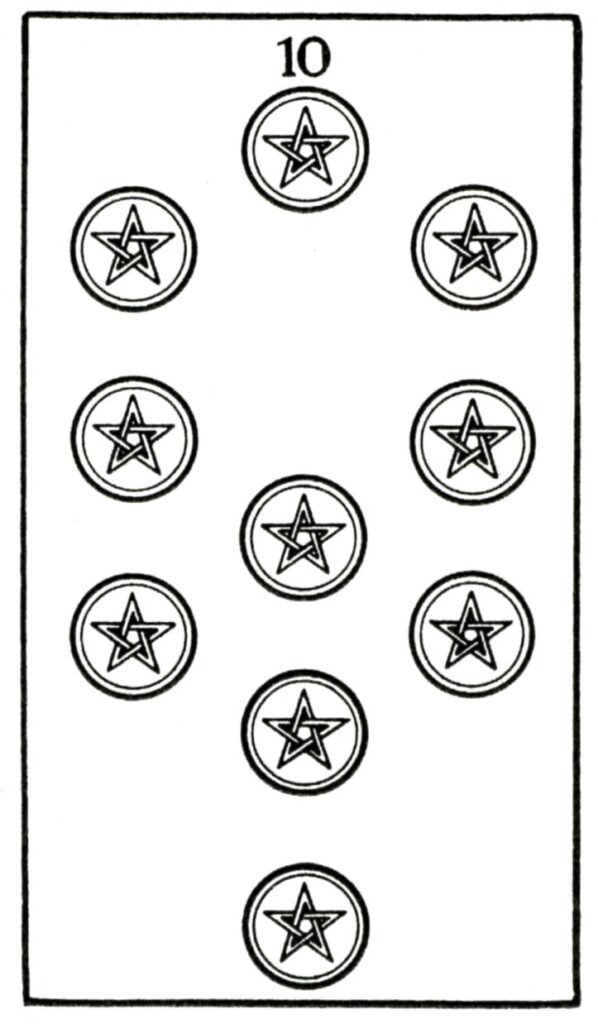
The Ten of Pentacles on the East/Ascendant is clear. Stoner appears in the world as someone who is already “at the end”, already old inside, already belonging to an order that aims at preservation rather than ascent. This is the final minor arcana of the whole Tarot. It is also Mercury in Virgo, a Mercury of silent labour, of microscopic care for the sentence, for the text, for transmission itself. Mercury in Virgo is also associated with the Hermit too. Stoner lives his entire life in something like an existential tenth house while scarcely ever leaving the first. His presence resembles that of someone who guards, watches, and keeps a lamp burning, a lamp that illuminates no halls, only a narrow corridor.
North/Imum Coeli – The Wheel of Fortune (X)
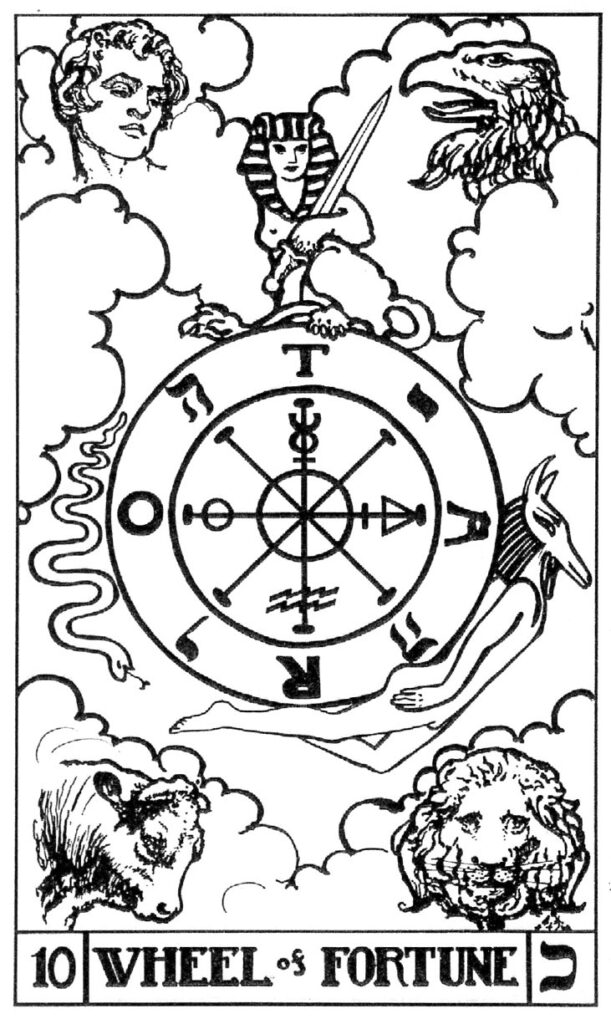
The Wheel in the North/Imum Coeli is perhaps the most metaphysically just point of this reading. Stoner stands neither as a tragic hero in the classical sense, nor as a rebel, nor as a saint. He is a man placed in an orbit from which he never departs. Kaph, the turning hand, offers a perfect image for his relation to destiny. There is little outward drama to call this fate in a romantic sense, but there is an almost complete submission to an order that remains unquestioned. The move from agriculture to literature, which in the novel looks like a conversion, works as a shift within the same circle rather than a break. It remains service, it remains obedience, work. The number Ten returns here as a number of closure and of return to the One (10 = 1+0 = 1), but one point deserves emphasis. In Stoner, the One represents necessity rather than revelation. He returns to the origin in order to fulfil, rather than to escape.
West/Descendant – Five of Wands
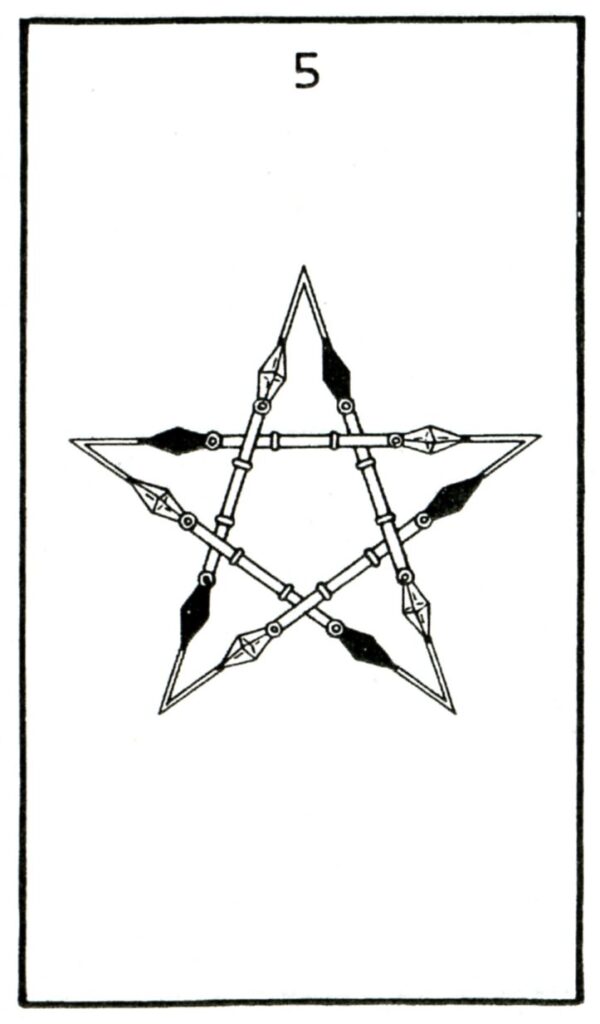
The Five of Wands on the West/Descendant feels almost too obvious, and that works in its favour. Saturn in Leo, a sign profoundly despised by Saturn himself, describes with clinical cruelty both the university world and the marriage. Conflict in Stoner never takes on a grand or epic form, but it remains constant, corrosive, repetitive. It becomes a war of egos, of small tyrannies, of petty games of power, where aggression usually appears as sabotage, humiliation, obstruction, and intrigue. Stoner’s great enemy is always the Other (the Descendant), understood as an unavoidable human field rather than as a metaphysical principle. He fails to play that game, he refuses it, he lacks the tools for it, and he pays for this with decades of mute friction.
South/Medium Coeli – Justice (VIII)
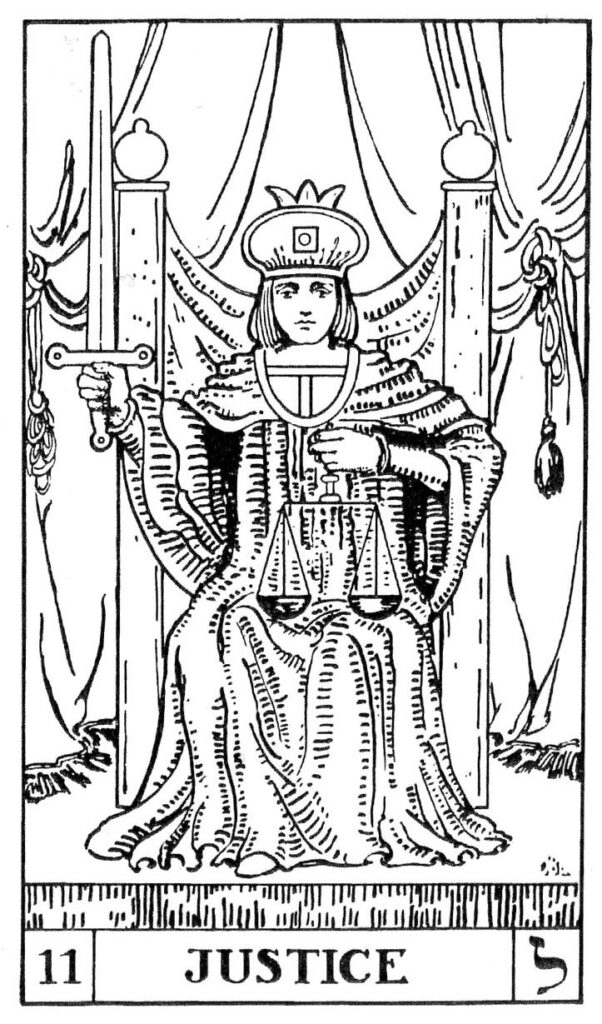
Justice on the South/Midheaven is perhaps the most subtle and the most dangerous point of the reading, because it raises a question that the novel itself leaves suspended. What kind of justice appears here? It has little to do with social justice, recognition, or repair. It resembles a Platonic, even a Stoic justice, measured only by the adequation between the life lived and the inner form that sustained it. Venus and Libra speak here of form, proportion, and measure, of fidelity to a certain idea of silent dignity. Stoner dies with a book in his arms because his entire life consisted in sustaining an axis of meaning in a world that never returned his gaze.
There is also an additional symbolic layer here. The South/Medium Coeli is the cardinal point associated with Saint Michael, the Archangel who is so often depicted holding the scales of Justice. This creates an interesting juxtaposition. The figure who weighs souls and deeds appears here as a presence that measures a life only against its own inner law. In Stoner’s case, the scales do not weigh success or failure, recognition or oblivion. They instead weigh fidelity, in its older sense of fides. Faithfulness to a form or a vow, rather than mere loyalty to a person or a cause.
Also, the correspondence between the Ascendant and the Midheaven is especially telling, since the Ascendant is the first house and the Midheaven is the tenth in Astrology. In the logic of derived houses, the tenth is where the first is brought to completion. The tenth is the first carried to its final form, the point where presence becomes accomplished shape. Stoner’s life describes a perfectly closed arc. What appears at the beginning in the Ten of Pentacles is simply brought, without deviation, to its end.
There is no card of pure beginning here, no Ace, no Fool, no inaugural impulse. Stoner appears as a man without an explosive beginning, but with a coherent end. In a literary world saturated with narratives of self-assertion, this gives him his strange and almost sacred quality.
Kύριε ελέησον