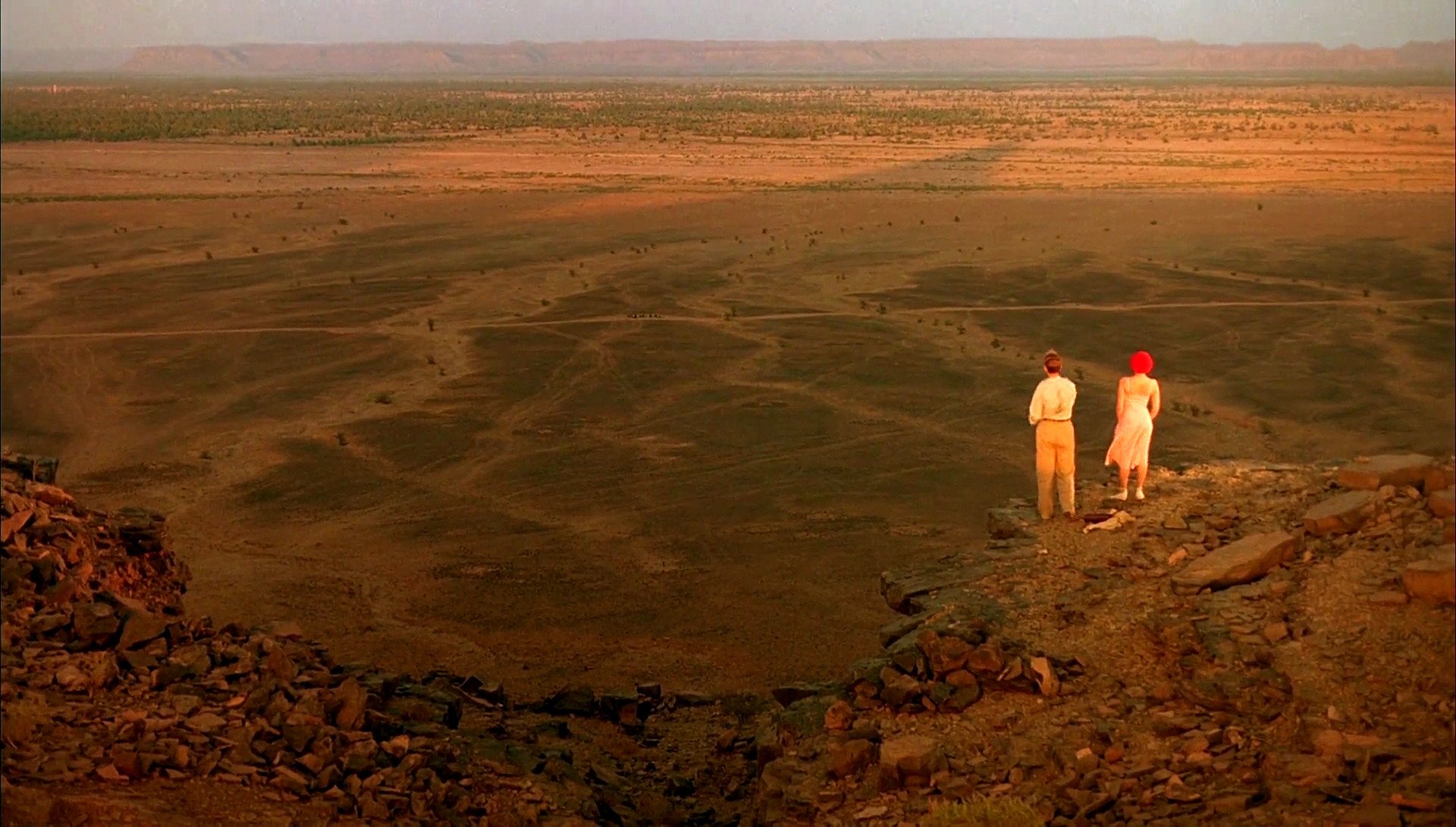
In the opening of Lost, the first track on Neurosis’ Enemy of the Sun (1993), the grave voice of Paul Bowles asks: “Are you lost?”. The sample, taken from Bernardo Bertolucci’s The Sheltering Sky, drifts through the track like an old voice amiss in an electric desert. To be lost is the necessary vertigo before the axis.
Have you ever felt disoriented? Who hasn’t? It happens daily, physically or metaphysically. The feeling of disorientation arises precisely from the absence of orientation. The word orientation comes from the Latin orientare, “to turn towards the east,” derived from oriens, the participle of orior, meaning “to rise,” “to emerge,” “to be born.” Oriens was also the name the ancients attributed to the East, the place where the Sun rises, the primordial symbol of emanation, dawn, and beginning. To orient oneself is to turn toward the rising point, aligning body and Spirit with the solar axis.
In the Christian tradition, churches were literally oriented, turned eastward, toward the direction where the Sun (and the Son) rises. In astrology, it is in the east that the Ascendant emerges, the Alpha (α) point of incarnation, the doorway through which the soul enters the visible world. It is also there that Aldebaran (α Tauri) burns, the Eye of the Bull and Watcher of the East, one of the Four Royal Stars of Persia, guardian of the dawn and sigil of initiation, tied to to the archangel Raphael, the healer whose breath restores the world to its axis.
What we often lack is precisely that inner East. When the Sun fails to rise within, the compass spins in emptiness and it is only fittingly ironic that Lost should open an album titled Enemy of the Sun.
But disorientation is born only from the recognition that orientation exists. Its absence allows us to perceive our condition and open the door to the search, whether physical through territory, or metaphysical through meaning. The search is always for what is missing, for what hides. Absence becomes the first gesture of presence, the negative that reveals the form. Just as night gives birth to the concept of day, so too does estrangement awaken the desire for the path. Loss is the baptism of sight.
The apophatic theology insinuates itself, the via negativa. God cannot be described; He is outlined by what He is not. One speaks of Him through negation: ineffable, invisible, incomprehensible. Language itself bends beneath the excess of what it attempts to name. But this impossibility inaugurates the spiritual motion. When the East cannot be found, we seek the Sun. When the voice falls silent, we learn to hear the silence. To orient the head toward the Sun is metanoia, the turning of the eyes toward the Nous.
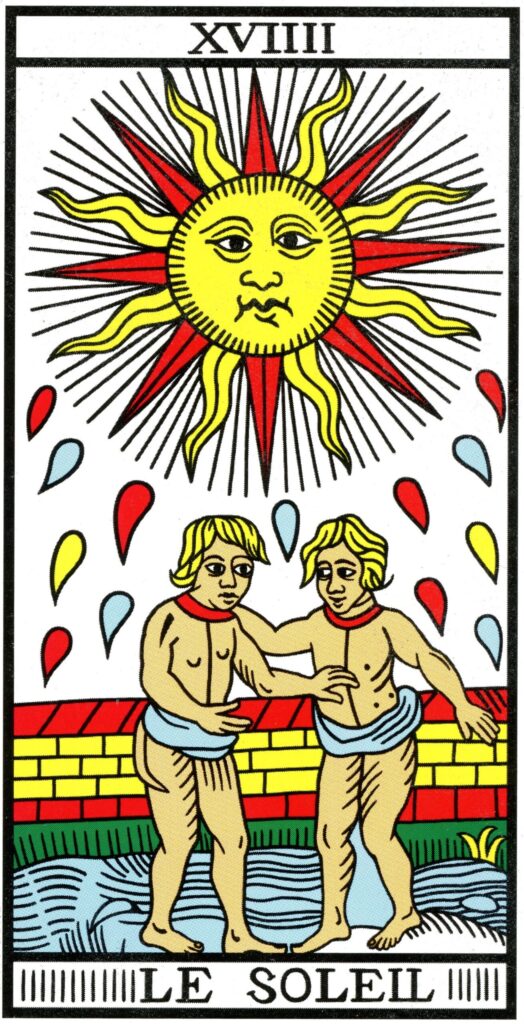
In the Tarot, Arcana XIX The Sun bears the Hebrew letter ר (Resh), meaning “Head.” On the Tree of Life, ר connects Hod (the mercurial sphere of reason, analysis, and naming) to Yesod, the lunar foundation that stabilises the interior image. When Hod is purified of noise and Yesod cleared of chaotic reflection, the path between them becomes translucent, and the intellect partakes of light. This confirms that The Sun embodies the final impulse of Yod, the culminating spark of the last of the seven ternaries of the Major Arcana; the ultimate, impetuous gesture of the active principle. It finds reception in the He of Judgement and full integration in the Vav of The World, where the creative fire of metanoia is enclosed, harmonised, and made whole.
Disorientation is not the opposite of orientation but its germinal condition. It is the ploughed soil before the seed comes into fruition. The inner world must lose itself to remember the cardinal point of being. What the mind calls absence is only the interval in which the spirit reorients itself. In the end, every spiritual path is a slow apprenticeship in losing oneself well. At last, until the Orient is reborn within the head and the Sun rises once more upon the face.
Kύριε ελέησον