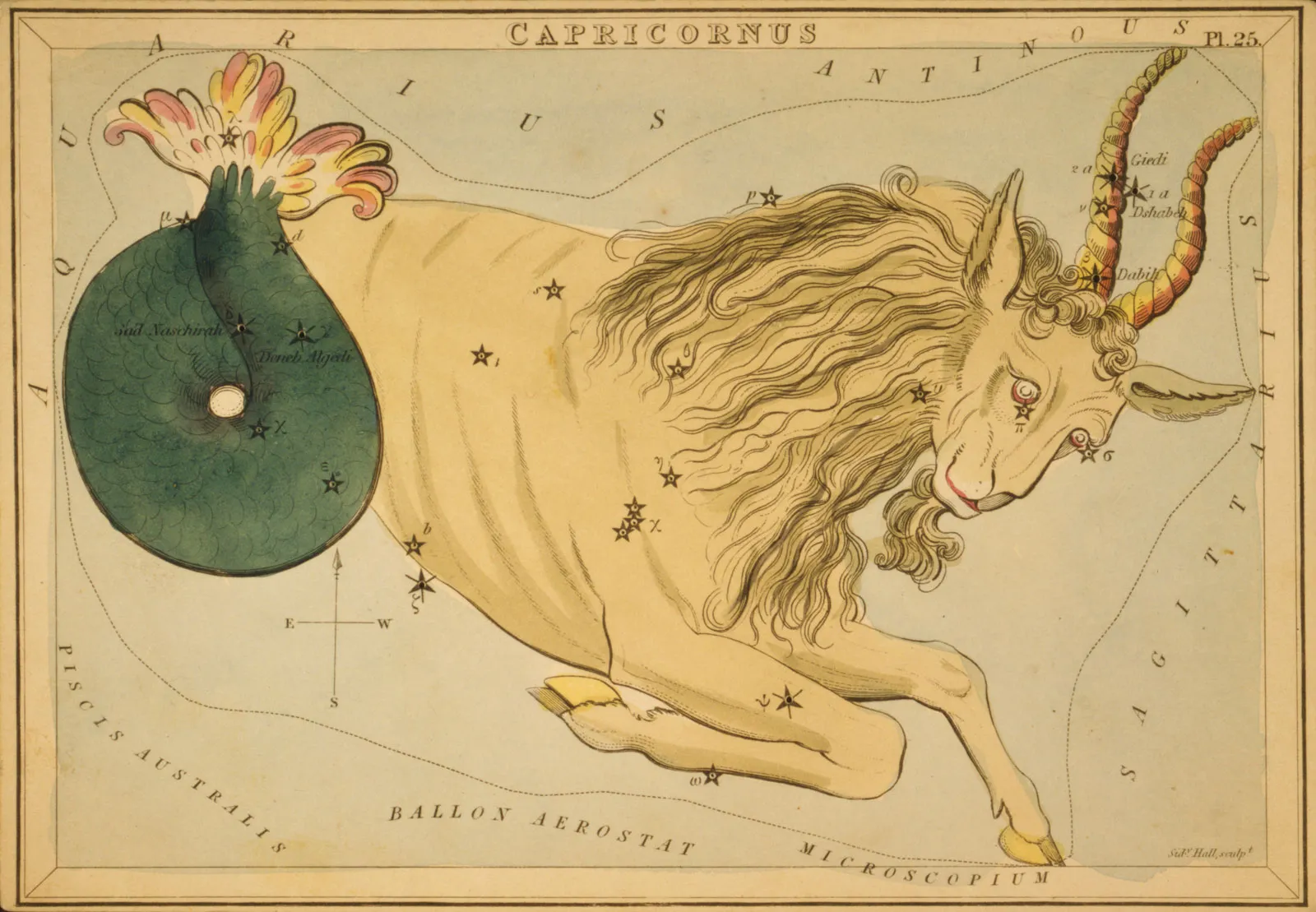

The name of Capricorn carries within it a secret that is older than Rome, older than Greece. It comes from the Latin Capricornus, a compound of caper meaning goat and cornu meaning horn. In Greek the same image was rendered as Aigokerōs, from aix for goat and keras for horn. The horned goat of the…

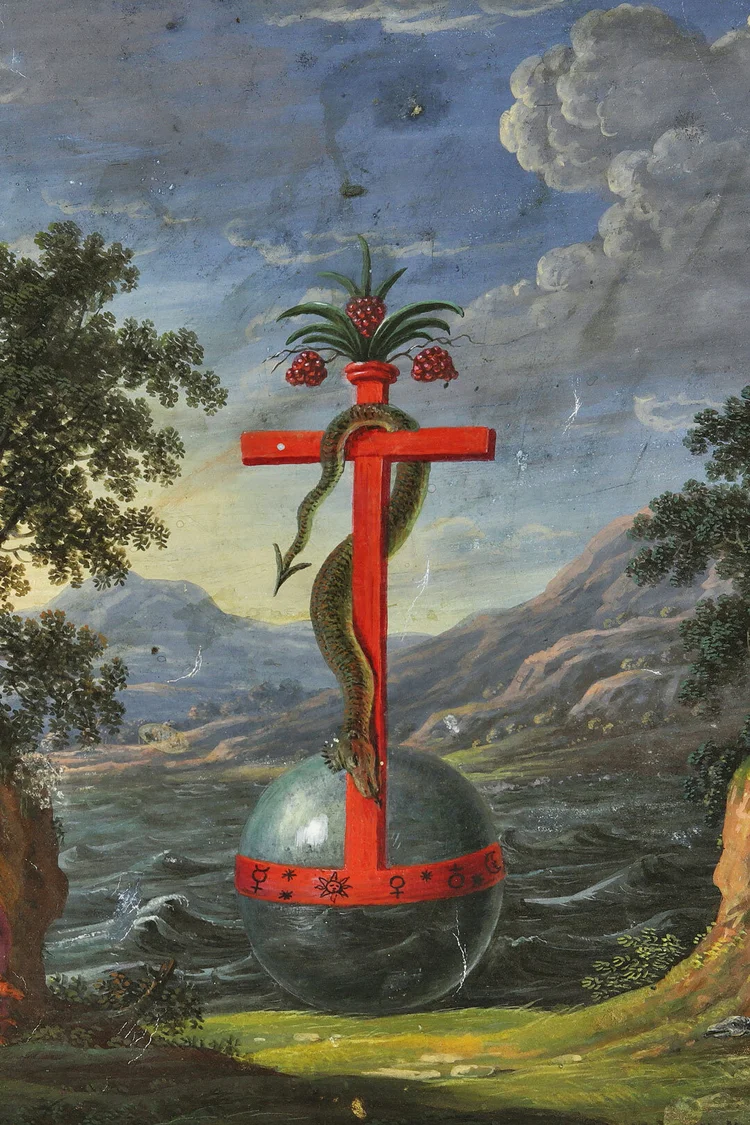
The image of the serpent runs through every current of mystical tradition. It coils around the Tree of Knowledge in Genesis; it burns in the deserts of Israel as the bronze figure that heals those who gaze upon it; it curls at the base of the spine in the secret lore of yoga; it climbs…

The Six of Pentacles holds a strange place in the Tarot. It does not dazzle with visions of towers or stars. It does not promise triumph or thunder. It shows a man giving coins, a balance in his hand, two figures at his feet. At first sight it may look ordinary, a social gesture of…

The human being stands beneath the wheeling heavens, woven into their intricate fabric of lights and shadows, obedient to rhythms older than memory. Time is measured by their motion, seasons carved by their courses, fate written in their alignments. The body is pulled by them, the soul impressed with their signs, the mind conditioned by…

The Cross stands as more than a tool of suffering; it is a symbol of the world made visible. The vertical and the horizontal meet and in their union a mystery is revealed. The ancients did not require it to be explained in scholastic detail, as they sensed that life itself unfolded upon these axes.…

“É a Tua face que eu procuro, Senhor.”“It is Your face that I seek, Lord.” The phrase inscribed upon the Portuguese writer António Telmo’s gravestone carries the purest confession of the soul. It is a sentence where philosophy becomes prayer. To seek the face of the Divine is to stand in the position of Sophia,…

Language hides the map of the soul. Words that in daily speech are used lightly once carried within them the full weight of heaven. To consider meant to look at the stars, to stand under the sky, to read in their light the measure of human time. Design comes from the act of marking with…

The mystery of manifestation is bound to the seal and sigil. In the act of sealing, the invisible breath becomes visible form; the hidden Will finds expression in matter. To seal is a gesture of fulfilment. It is the descent of the Divine current into flesh. When the Gospel declares that the Word became flesh…

Astrology has long been accused of being a prison of necessity, a web of iron fates traced by the stars upon one’s fragile body. But those who look beyond fortune-telling and prediction find that traitional astrology is more than a fatalistic code. It is a mirror of the labyrinth itself, a language of the cosmic…

The Gospel of Philip preserves a line of fire that illuminates the destiny of the soul. The fragment speaks of what must be confessed when the soul rises through the heavens and faces the virtues that stand as guardians of ascent. The voice declares: “I came to know myself; I gathered myself from every part;…