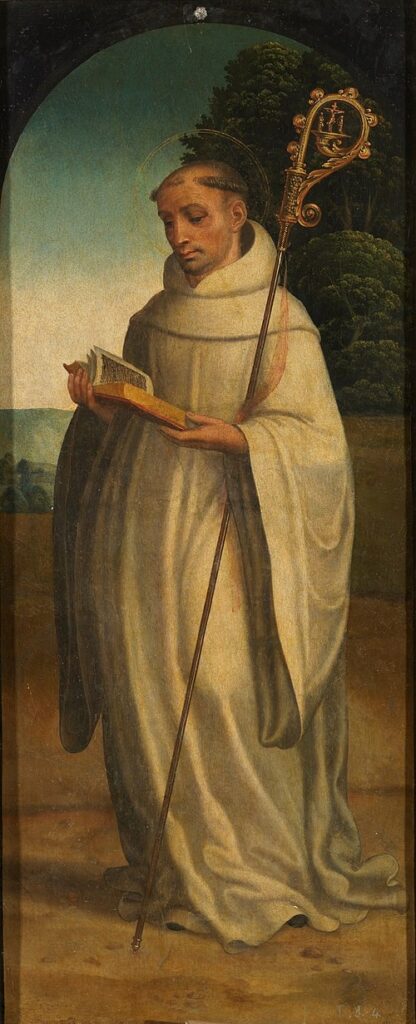
One of the towering monastic figures of the twelfth century in Europe, Saint Bernard of Clairvaux was the spiritual architect of Cîteaux’s renewal and the driving force behind the Cistercian expansion across the continent. His influence reached far beyond the cloister, as he became counsellor to popes and kings and shaped the ethos of knighthood that would culminate in the Knights Templar ideal. Even amid this public exposure, Bernard remained a mystic. One of his symbols is the crozier, the abbatial staff that curves like a serpent and spirals like a shell, one of the most hermetic emblems in Christendom.
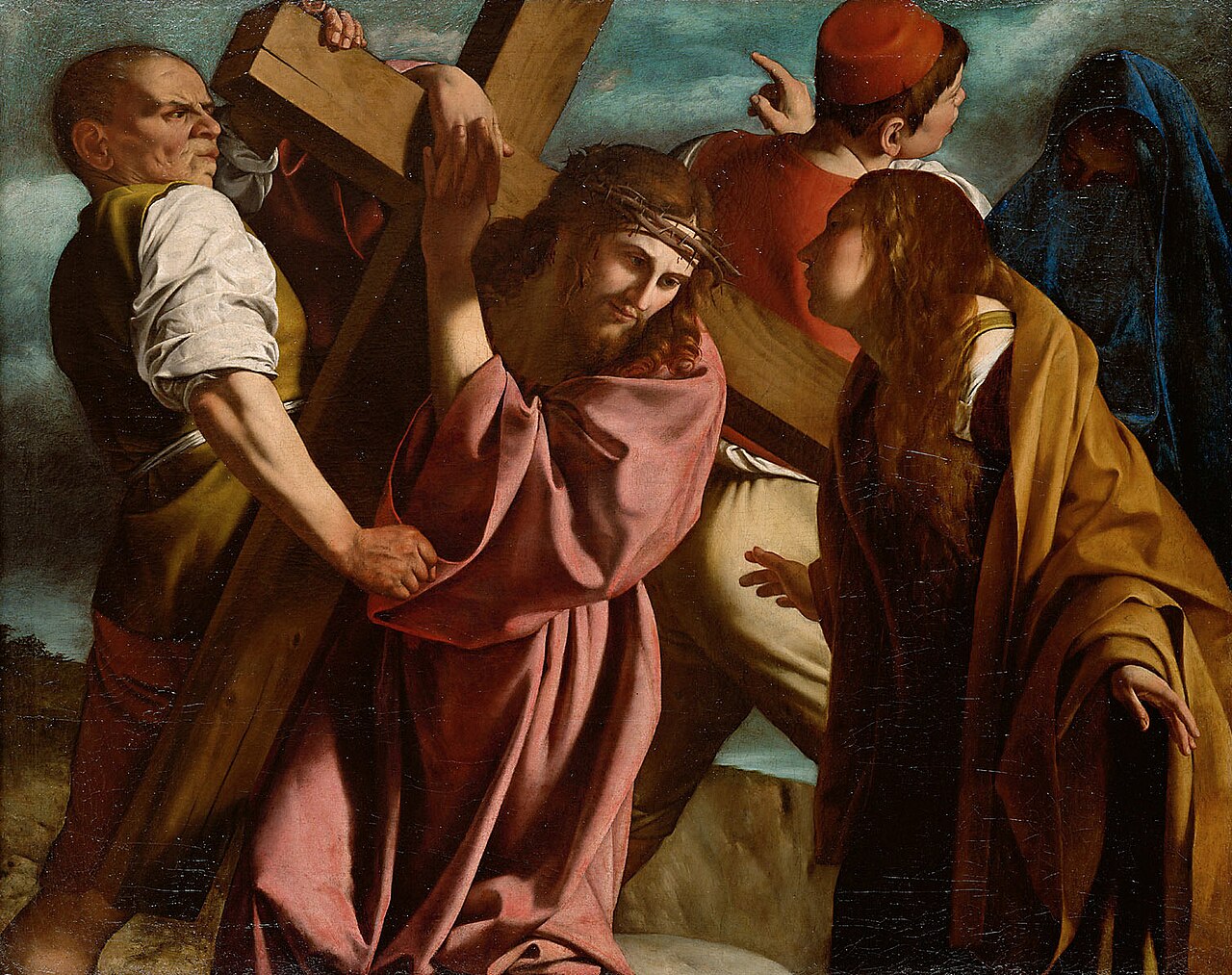
In one of his contemplations, Bernard is said to have received a revelation from Christ Himself. Asking which of His sufferings had been the most hidden, the Lord replied: “I had upon My Shoulder, while I bore the Cross, a wound more grievous than all the others, and it was never recorded by men. Honour this Wound, and I shall grant whatsoever thou dost ask through its virtue and merit.” This unrecorded wound opens a door into the secret anatomy of the Passion. It is the wound that sustains all others, the invisible junction where Divine will meets the limitation of flesh.
The theologian of affectus, Bernard understood it as the sacrament of labour itself: the point at which the soul consents to bear the weight of its own calling. Unglorified and unseen, the shoulder bridges action and endurance, the arm that moves and the back that carries. Pain turns into vocation, the measure of fidelity to the work one was sent to accomplish. Etymologically, vocation comes from the Latin vocātiō, derived from vocāre, “to call.” The same root gives us voice, invoke, and evoke, sharing the idea of a sound that summons. In its earliest ecclesiastical sense, vocatio referred to God’s calling of souls to faith or office. The Divine utterance that draws the individual out of dispersion toward purpose.
In astrology, this idea of a “calling” finds its mirror in the tenth house, often containing the Medium Coeli, the place of vocation and visible work. It is where the task and labour of the soul becomes manifest, where our hidden nature seeks expression through worldly form. The tenth traditionally contains Capricorn and is therefore ruled by Saturn, the planet that transforms impulse into structure, and where one discovers not what one wants to do, but what one must become.
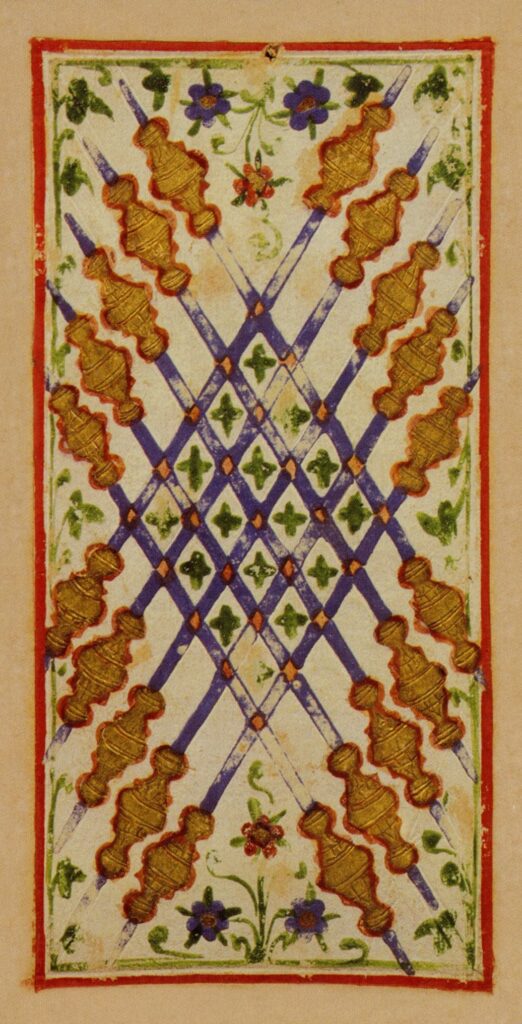
That same principle finds its equivalent in the Ten of Wands, the card that completes the fiery sequence of the Tarot. It belongs to the final decan of Fire, monitored by Saturn in Sagittarius. The expansive, mutable energy of Sagittarius, ruled by the warm, sanguine, humid and benefic Jupiter collides with Saturn’s cold, melancholic, dry and malefic insistence on form. The result is friction and fatigue. Fire discovers its own boundary and Will and Emanation realise they can go no further. It is the moment when ardour, having spent itself, must submit to necessity, to Ἀνάγκη (anánkē), the ancient power of inevitability before which even the gods must bow, the law that binds will to form.
The Ten of Wands is the invisible wound of the Fire element, just as the Shoulder Wound was the hidden pain of the Logos. It marks the consummation of the Yod, the Divine impulse that, upon reaching its limit, transforms from expansion into sacrifice. When we honour that wound, in Christ or in oneself, we accept that the highest Will is the one that ultimately endures. It is the moment when the centaur kneels, when Saturn’s weight becomes Grace, and when the burden of Fire reveals itself as the discipline of Love.
Kύριε ελέησον