
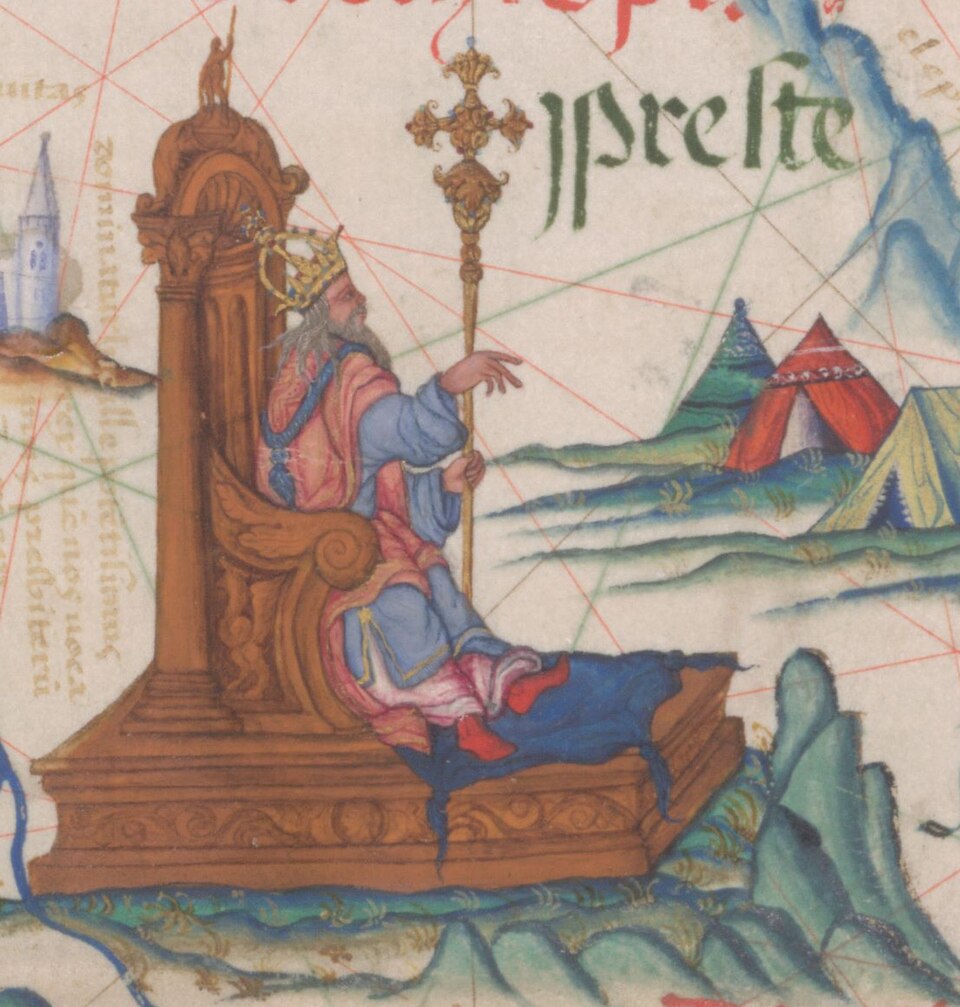
At the dawn of the sixteenth century, Portugal was a kingdom that sought the Omphalos, the navel of the world, the sacred centre where Heaven and Earth could converge. The old Knights Templar, reborn as the Order of Christ in Portuguese territory, had exchanged the horse for the caravel, carrying the Cross across the seas in pursuit of that hidden axis, the legendary Kingdom of Prester John. Navigation was a form of pilgrimage and an act of metaphysical cartography.
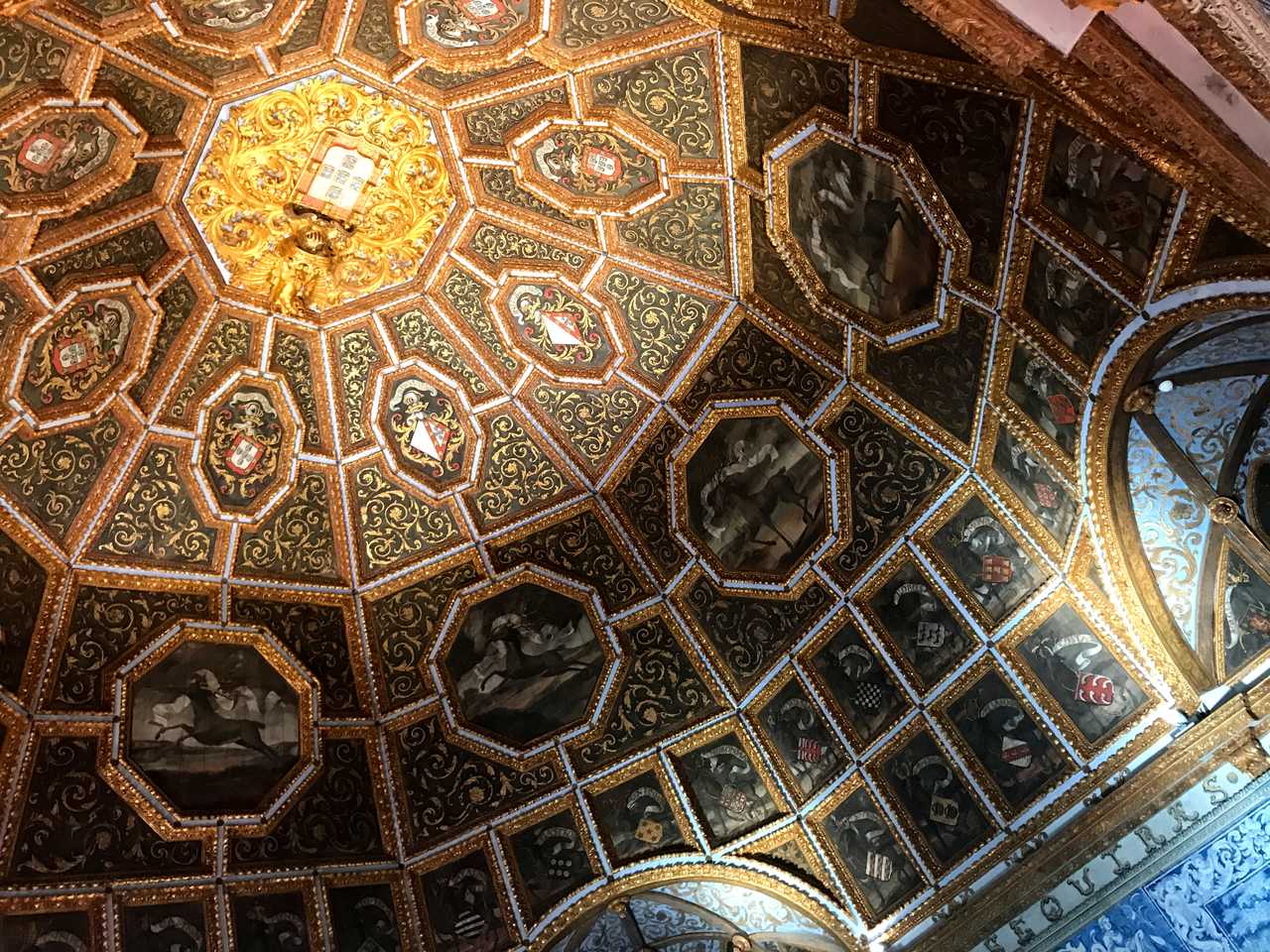
This visionary atmosphere conceived the Hall of Coats of Arms in the National Palace of Sintra. Inspired by the ideal of universal harmony, King Manuel I commissioned the painting of 72 coats of arms on its ceiling, a heraldic firmament representing the principal noble families of Portugal. This act was in itself a symbolic architecture of the cosmos. The king, a solar figure at the centre of this constellation, sought to mirror in the order of the terrestiral realm the order of Creation itself. While searching outward for the lost Kingdom of Prester John, Portugal was in truth constructing its own Omphalos within, a radiant axis where the temporal and the divine briefly coincided.
The number 72 was not a coincidence. In crowning his hall with seventy-two coats of arms, Manuel I performed a metaphysical act: he placed at Sintra the centre he had once sought beyond the seas. The Solar King enthroned himself within a zodiacal mandala: seventy-two rays of the cosmic wheel, the doubling of the thirty-six Egyptian decans, through which Divine energy descends into the manifested world. This same structure underlies the Shem ha-Mephorash (שֵׁם הַמְּפֹרָשׁ), the “Explicit Name” of God composed of seventy-two triads of Hebrew letters extracted from the Book of Exodus. Each triad designates an angelic intelligence, a function of the divine Word active in the created order. The heraldic families surrounding the royal arms mirror those angelic hosts encircling the throne of the Almighty, temporal sigils reflecting celestial offices.
In the Kabbalistic arithmetic, seventy-two in Gematria also equals gilgul (גִּלְגּוּל), the cycles of transmigration by which the soul moves through bodies, histories, and elements, perfecting itself before its return to the Source. It is the same rhythm found in the precessional measure of seventy-two years per degree of the great cosmic rotation, and in the seventy-two prophets who carried the Word across time. Within the vault of Sintra, all these correspondences converge: divine Names, angelic hierarchies, astrological decans, ancestral lineages, as it is the wheel of emanation inscribed in the architecture of empire.
From the heraldic dome of Sintra to the constellations that guided the caravels, Portugal moved beneath the sign of the Cross. The Navigator Company was the execution of the Cross itself: to embrace the Divine Will descending from above and to fulfil it below. The kingdom became the arm that carried Heaven’s command into matter, transforming navigation into liturgy.
But the Cross demands a second motion. To consummate the Will received from above, the horizontal axis had to be traced across the world. The ships of the Order of Christ sailed from West to East, bearing the red Cross upon their sails, seeking in the distant lands of Prester John the reflection of the same Light that had descended upon them. In that convergence of East and West, Above and Below, Portugal enacted the full geometry of redemption, the moment when the two axes meet and the Centre of the Cross is revealed: the point where the divine and the human, Heaven and Earth, become one act, one kingdom, one flame.
Kύριε ελέησον