
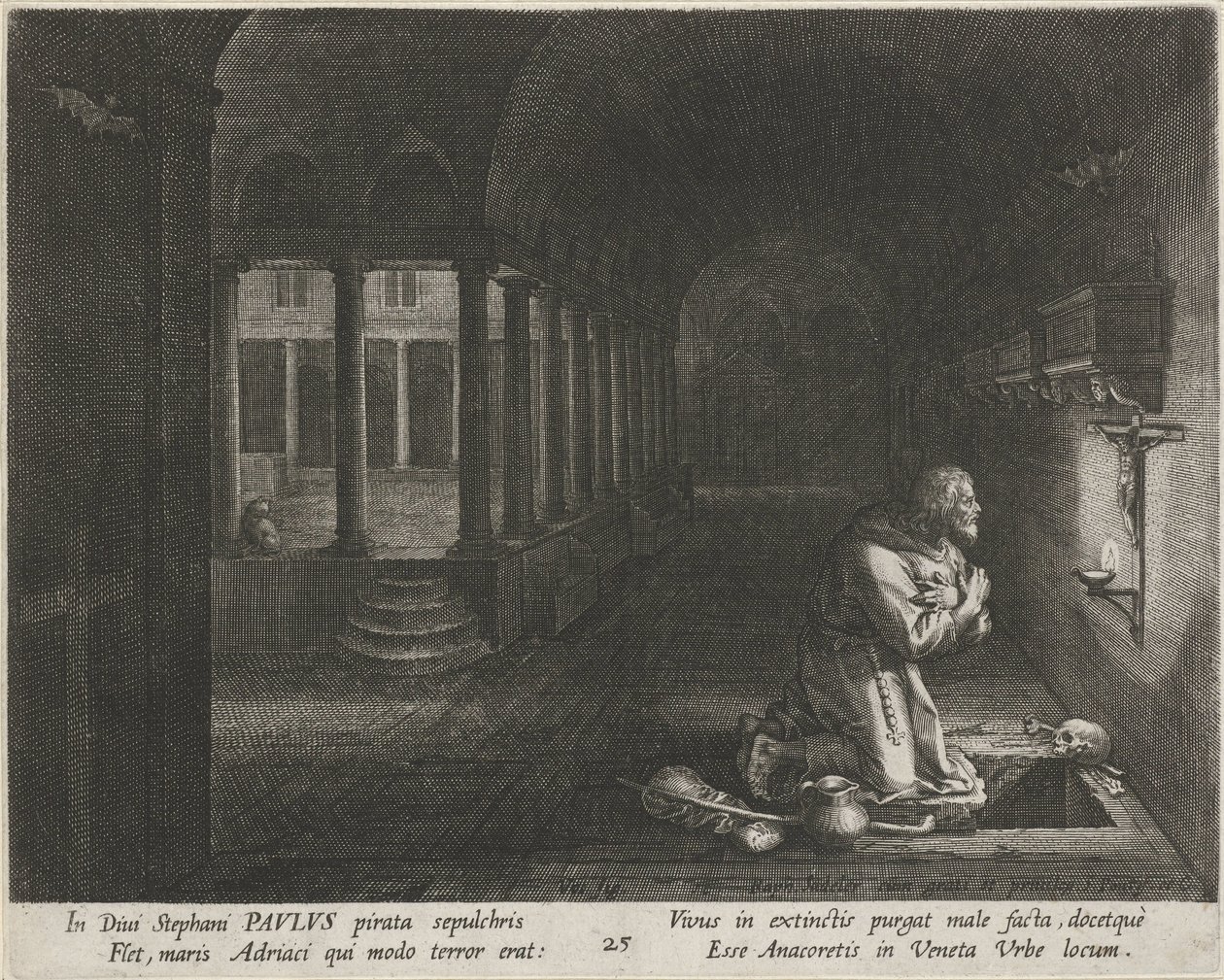
Éliphas Lévi claimed that Arcane IX, The Hermit, symbolises initiation. There are solid grounds for this, and we can extend this reading to the Aristotelian concept of hylomorphism. To begin with, this card is associated with Mercury. Some say that, in the Rider-Waite, the monk is Hermes Trismegistus. Be that as it may, the presence of Mercury, and in particular the association with Virgo, opens several doors. Mercury in Virgo has domicile and is exalted. It is a sign in which it operates with total freedom. Analytical, meticulous, judicious, precise.
Mercury-Hermes is also the god of the mantic arts, of translation, manuals, and symbols. There is no initiation without knowledge of technique (technē, from Greek téchnē, meaning art, craft, or skill in making, rooted in tektōn, “builder” or “carpenter,” something constructed through learned method rather than inspiration alone) and of how important this is. But this is already symbolised more by the Arcane I, The Magician, where we have Mercury as knower of the four elements, operative, more Geminian even.
In Virgo, this knowledge points more inward than outward, close to the Rosicrucian motto Timor Dei, Gnosce te ipsum, Amor proximi. The second step seems to be what this card heralds: knowledge of oneself, awareness of what one is, of one’s limits, flaws, errors, and also of one’s virtues. Many magicians write daily, every day, their errors and successes in magic practices and life in general, something close to the Stoic writing recommended by Marcus Aurelius.
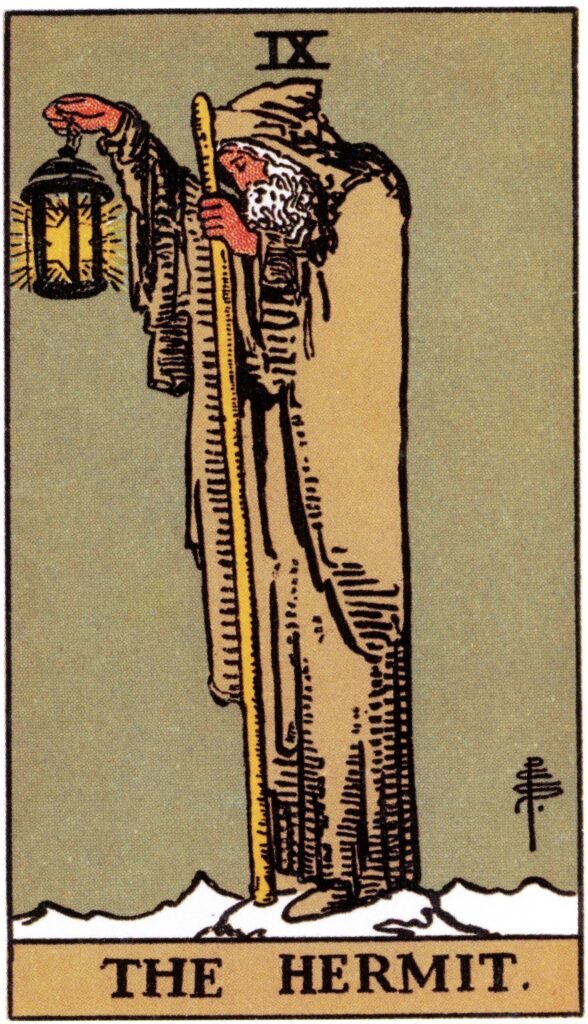
Very often this knowledge implies a descent inward. Virgo is Earth, and Earth is a denser, harder element, which points downward, toward the interior of something. It is cold and dry, melancholic, closer to stone than to fertile soil. More than simply descending, we need to excavate and walk towards the centre of ourselves. On the Tree of Life, the Hermit descends from Chesed, on the column of Abba, down to Tifereth, the luminous solar centre. There is a descent toward luminosity, but the path is dark, hence the lamp in the hand, to illuminate one’s own feet (Psalm 119:105; John 8:12) and to find one’s own inner nitzotz, hidden beneath all the weight of material density.
This self-knowledge is an initiatory key. Without it, little is accomplished. It is what allows su to identify impulses, tendencies, their origin, and to practise the spiritual discernment spoken of by Saint Paul. It is also a sober process. Mercury in Virgo describes a meticulous process, not an emotional one. In the zodiac wheel, Virgo is opposed to Pisces and Mercury has no dignities in Water signs either. Everything in this card points to the sobriety of emotions and nepsis of the monk, not to emotional ecstasy. It is also here that the mantic arts, such as medieval astrology or geomancy, can help, because they allow one to identify those same tendencies, patterns, loops, and the set of obligations that was assigned to us in incarnation.
This process of self-knowledge leads to the axis between God and or form. In Aristotelian terms, through the doctrine of hylomorphism, every being is composed of matter (hýlē) and form (morphḗ). Matter is the raw potential we are given, while form is the intelligible principle that determines what a thing is. Human life is the progressively actualisation of our form by working upon the given matter of temperament, circumstance, and limitations. It’s like taking an uncut block of stone and shaping it into a statue whose figure already exists in potency. The Hermit is this slow and solitary work of self-refinement, the walk from undifferentiated potential to articulated being.
Kύριε ελέησον